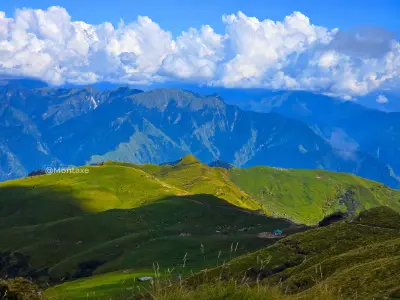
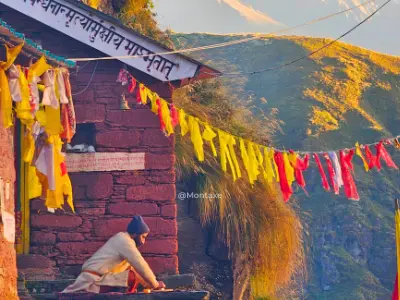
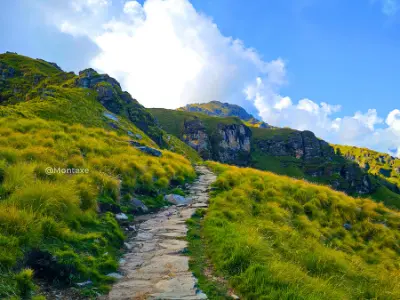
Panar Bugyal is one of the most stunning alpine meadows in Uttarakhand, located on the route to Rudranath Temple. It is situated at an altitude of around 3,400 metres and is famous for its vast green meadows that stretch endlessly along the ridge.
Trekkers often call Panar Bugyal the highlight of the Rudranath trek, not only because of its natural beauty but also because it gives a 120° panoramic view of the Himalayan range. The meadow is peaceful and raw, with a small forest chowki located in the middle, which adds to its charm.
How to Reach Panar Bugyal
Panar Bugyal via Sagar Village
The most popular route to Panar Bugyal starts from Sagar village, near Gopeshwar. The trek passes through Pung Bugyal, Kalchant Bugyal, Mauli Kharak, and Lyuti Bugyal before reaching Panar. This route is considered moderate, with few steep climbs. Trekkers usually stay at Lyuti Bugyal, as camping in Panar has been restricted.
Panar Bugyal via Toli Tal (Urgam Valley or Maikot)
An alternative but tougher approach comes from Urgam Valley or Maikot near Gopeshwar, passing through Toli Tal, a scenic alpine lake. This trail is used by villagers and pilgrims coming from Urgam valley after visiting Kalpeshwar (One of the Panchkedar Temple). While the route is beautiful, it is steeper and more demanding than the Sagar side.
Panar Bugyal via Mandal through Anusuya Devi
Another route begins at Mandal village, leading through Anusuya Devi Temple. From here, trekkers can reach Rudranath first and then descend to Panar Bugyal, later exiting via Sagar village. This path is usually the less taken.
Is Camping Allowed in Panar Bugyal?
Camping was earlier allowed in Panar Bugyal, and small dhabas and camps were set up in the meadow. However, in recent years, local authorities banned camping at Panar to protect the grassland ecosystem. Now, all camps and dhabas have been shifted to Lyuti Bugyal, which lies just below Panar. Trekkers usually stay at Lyuti and then continue to Panar the next morning.
Places Near Panar Bugyal
Lyuti Bugyal – The campsite before Panar, offering views of Jhandi Top and the open valley.
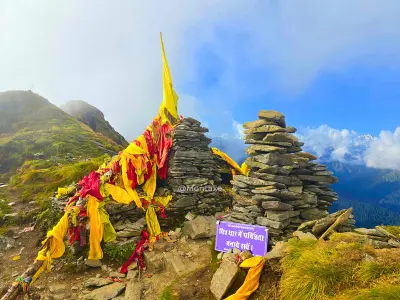
Pitradhar – Highest point on the trek at about 4,000 m, marked with flags and a small stone temple where offerings are made to ancestors.
Panchganga – A water point and trail junction where the Mandal route meets the Sagar route.
Rudranath Temple – Located a few kilometres beyond Panar, the temple is the main destination of the trek.
Best Time to Visit Panar Bugyal
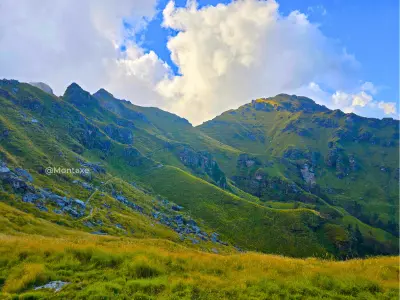
The best time to visit Panar Bugyal is May to June and September to October. In summer, the meadow is covered with green grass and blooming wildflowers, while in autumn, the skies are clearer, giving sharp views of the Himalayan peaks. Monsoon months are avoided due to slippery trails, and in winter the entire area remains unaccessible due to heavy snow.
Himalayan Peaks Visible from Panar Bugyal
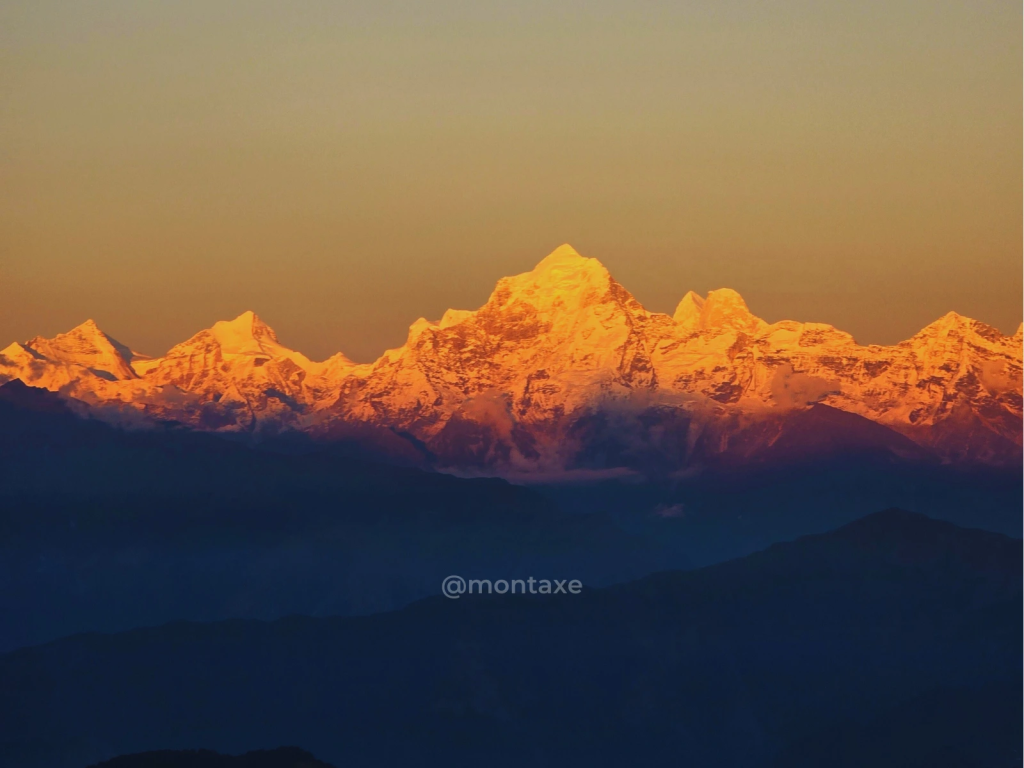
From Panar Bugyal, trekkers can see an impressive range of peaks including:
Nanda Devi
Nanda Ghunti
Trishul
Dronagiri
Bandarpunch
Chaukhamba
The view from Panar is often described as one of the best in the Garhwal Himalayas.
As Montaxe founder Shivam describes: “I have been on more than 80 treks across the Himalayas, but Panar Bugyal stole my heart the very first time I saw it.” Trekkers often pause in silence here, taking in the beauty before continuing towards Rudranath.
Best Time to Do Rudranath Trek
About Rudranath Trek
Rudranath is one of the Panchkedar temples dedicated to Lord Shiva. The temple is located in Chamoli district of Uttarakhand at an altitude of about 3,600 m. The temple remains open only for a few months in the year, usually from April or May until October or November. During the winter months, the temple closes and the chal vigrh doli (idol) of Rudranath Ji is brought to Gopinath temple in Gopeshwar, where the pooja continue until the kapat opens again.
The best time to do the Rudranath trek can be divided into three main seasons: summer, monsoon, and autumn. Each season offers a different experience for trekkers.
Summer (April – June)
Summer is the most visited time for the Rudranath trek. The weather remains pleasant and the trails are easier to walk compared to other months.
In early April, the route is filled with blooming rhododendrons, especially white and purple flowers.
Meadows and forests appear lush green, making the trail scenic.
The weather is favourable with clear views of Himalayan peaks.
Trails are dry and stable, unlike the monsoon season when they become slippery.
Fog is less frequent, so mountain views are more reliable.
Monsoon (July – September)
The monsoon is the least preferred season for Rudranath. Rain is frequent and trails become muddy.
Trekkers face slippery paths, fog, and sudden weather changes.
Continuous rain can make camping and walking uncomfortable.
However, the landscape becomes greener and more vibrant.
The route is less crowded, giving a peaceful experience.
If the sky clears, even for a short time, the view of the Himalayan peaks can be unforgettable.
Autumn (October – November)
Autumn is considered the best time to do the Rudranath trek. The weather conditions are most stable and skies are usually clear.
Himalayan peaks such as Nanda Devi, Trishul, and Chaukhamba are visible in sharp detail.
Trails are dry, making it easy to hike.
Days are pleasant and nights are cold but manageable.
The clear atmosphere makes this season ideal for photography and long views of the mountains.
Winter (December – March)
In winter, heavy snowfall covers the region and the temple remains closed. The chal vigrh doli of Rudranath is kept at Gopinath temple in Gopeshwar, where daily pooja continues until the kapat of Rudranath opens again in summer.