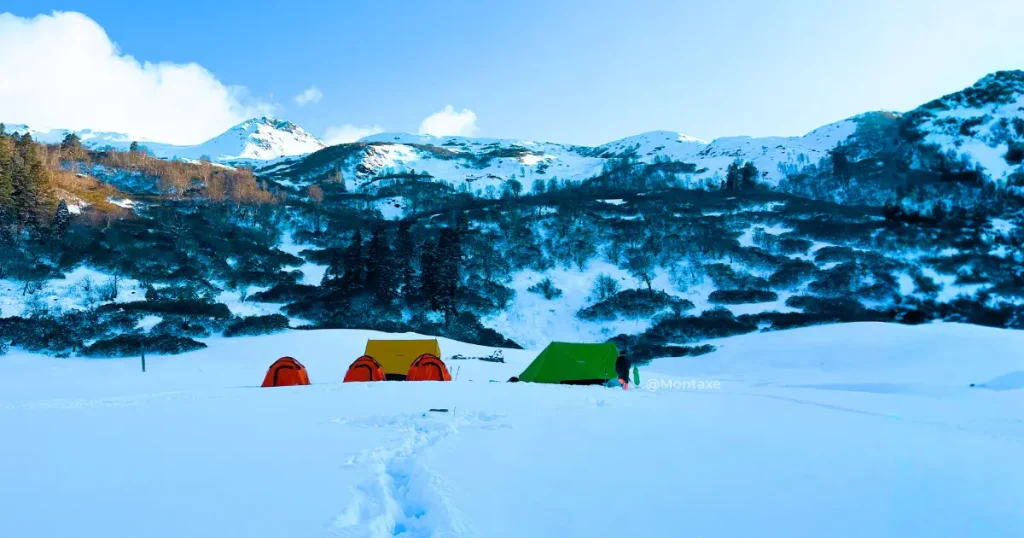
Gulabi Kantha Trek of the Year 2025-26 has been officially announced by the Uttarakhand Government, recognising its unique landscape, seasonal versatility, and growing importance in sustainable mountain tourism.
Along with Gulabi Kantha, two other treks were also honoured for the 2025–26 season: Bankatiya Base Camp in Pithoragarh and Chenab Valley in Chamoli, as confirmed in the official Uttarakhand Tourism notification.
Last year, this recognition went to Sarutal Trek. In 2025, Gulabi Kantha steps into the spotlight, a trail that trekkers and local communities quietly admired long before it became widely known.
Where Gulabi Kantha Is Located
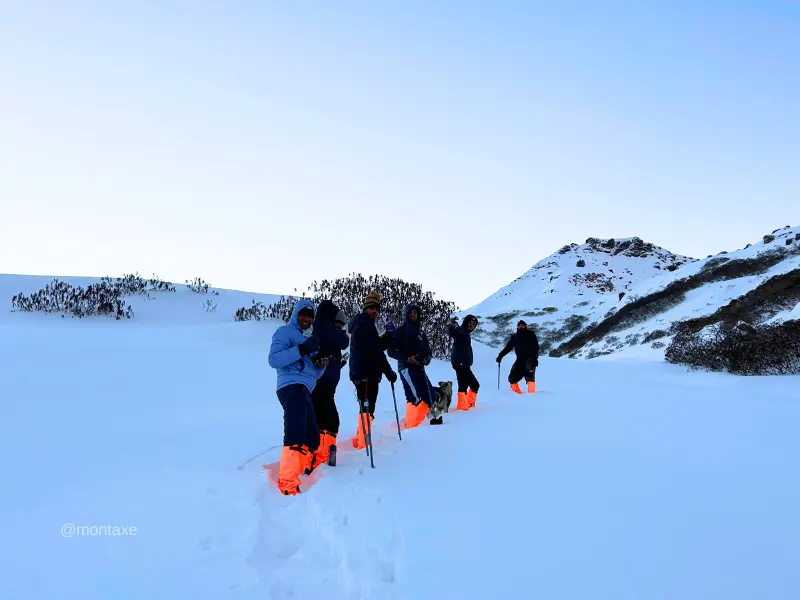
Gulabi Kantha lies in the Yamuna Valley region of Uttarkashi district, deep inside the Rawain belt of Uttarakhand. The trek begins from remote villages near Barkot and gradually climbs through forests, meadows, and high ridgelines to reach the Gulabi Kantha summit.
From the top, the trail opens into a dramatic cross-valley Himalayan view, offering a perspective that feels raw, expansive, and far less commercial than many mainstream winter treks.
Why Gulabi Kantha Trek of the Year 2025-26 Was Chosen?
The Uttarakhand Government’s recognition did not come from popularity alone. Gulabi Kantha stands out because it offers:
- A less explored, beginner-friendly trail without compromising on views
- Genuine all-season trekking potential, not limited to winter
- A rare cross-valley route connecting the Yamuna and Ganga valleys
- Strong scope for sustainable, low-impact tourism
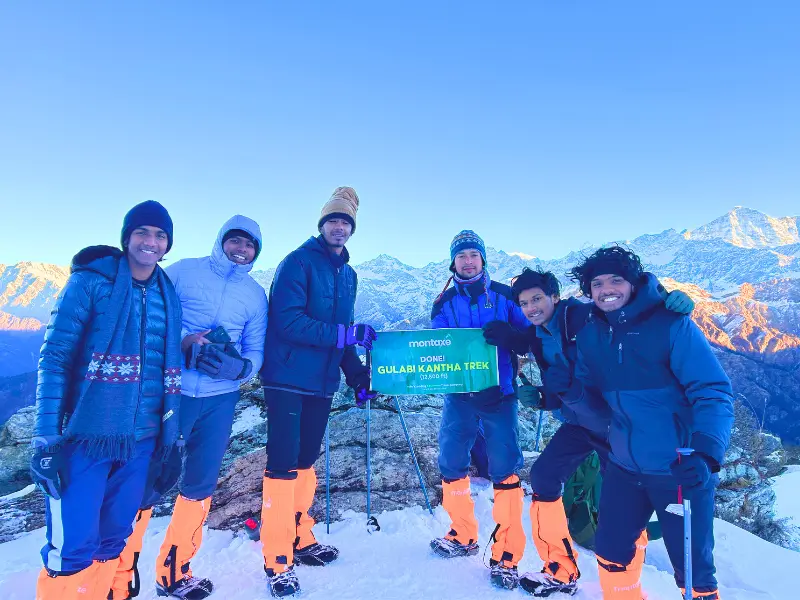
In a state where many treks are overcrowded, Gulabi Kantha still feels calm, spacious, and close to nature.
Our Early Journey With Gulabi Kantha (Back In 2018)
At Montaxe, our journey with Gulabi Kantha began quietly in 2018.
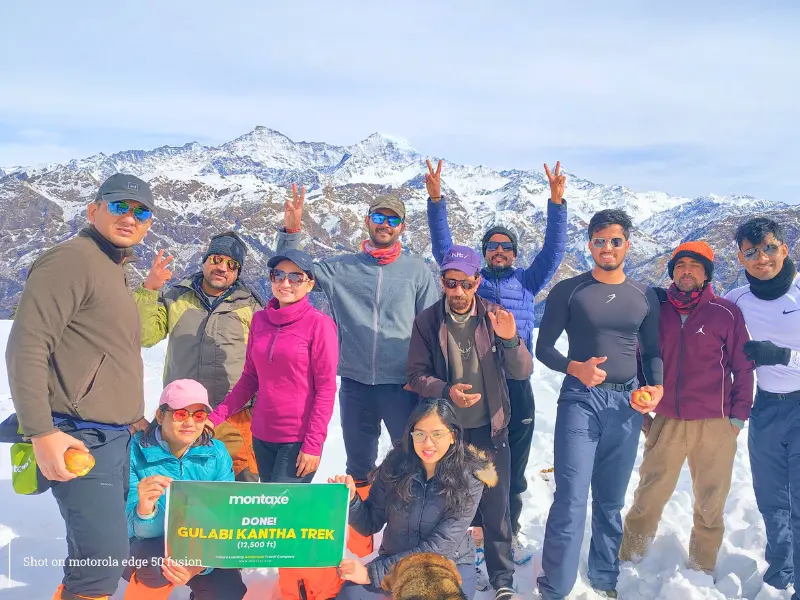
At a time when very few people knew about this trail and only a handful of local guides conducted treks here, we suggested Gulabi Kantha to trekkers who were looking for something less commercial, less challenging, but deeply rewarding.
They trusted the suggestion, experienced the trail, and their feedback was simple. The experience exceeded expectations. That year, we conducted two to three batches to Gulabi Kantha, long before it entered mainstream trekking conversations. We share this not as a claim, but as a reflection of how the trail has always deserved attention.
A Rare Monsoon Himalayan Experience
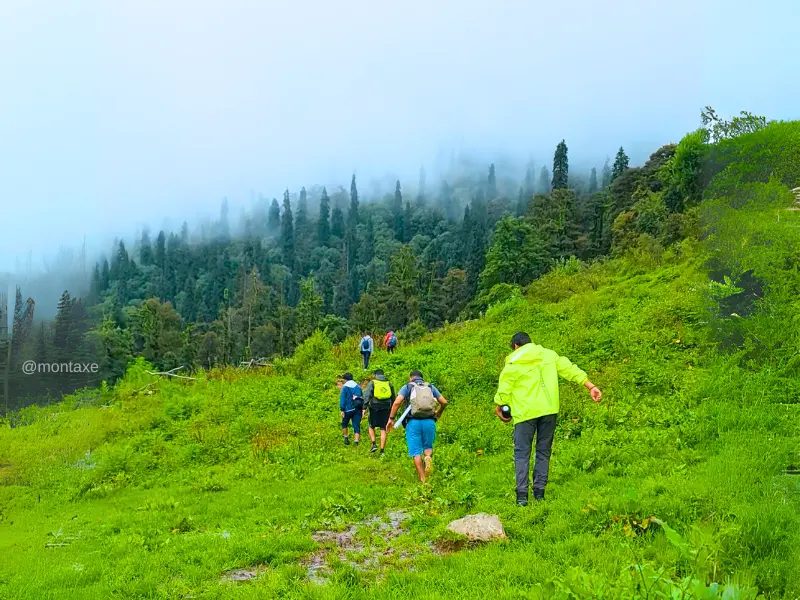
One of the most defining moments for our team came during the monsoon of 2022.
Monsoon trekking options in the Himalayas are limited due to terrain risks and unpredictable weather. Apart from trails like Hampta Pass or Valley of Flowers, choices are few. Gulabi Kantha emerged as an alternative and surprised all of us.
Those monsoon days revealed a completely different face of the trek:
- Multiple natural water streams crossing the trail
- Greenery at its absolute peak
- Clouds drifting through forests and meadows
- Dense deodar trees and wide grasslands
- Tall green mountains enclosing the route
Many of us have trekked in Valley of Flowers, yet Gulabi Kantha during monsoon felt raw, immersive, and quietly powerful in its own way.
Not Just A Winter Trek
Today, Gulabi Kantha is often promoted as a winter trek, and rightly so. Snow transforms the trail into a pristine alpine landscape.
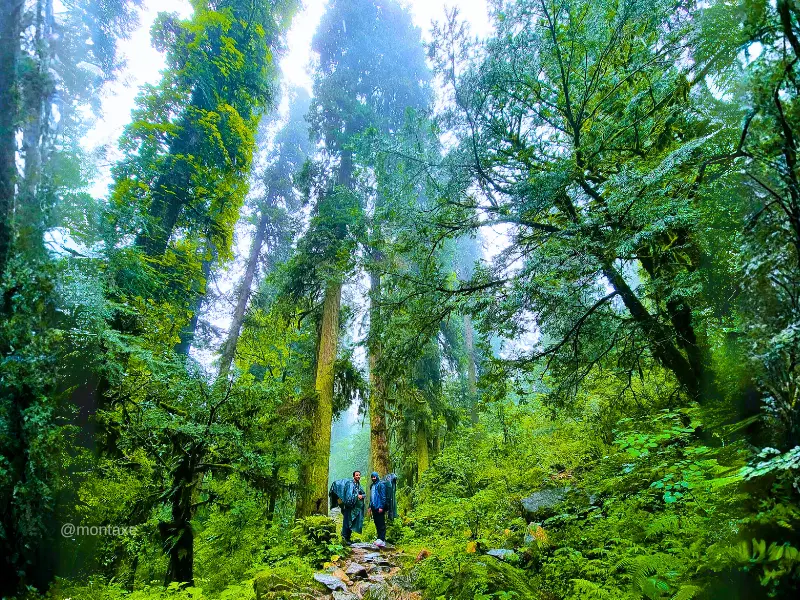
But its real strength lies in its seasonal diversity:
- Spring: Forests bloom with red and pink rhododendrons
- Monsoon: Lush meadows, flowing streams, cloud-filled valleys
- Autumn and Winter: Clear views, snowfields, and sharp ridgelines
This makes Gulabi Kantha one of the few Himalayan treks that genuinely offers something unique in every season.
Less Crowded, More Beautiful
Compared to popular treks like Kedarkantha, Dayara Bugyal, or Brahmatal, Gulabi Kantha remains:
- Less crowded
- More forest-oriented
- More expansive in landscape
- Rich in trail variety
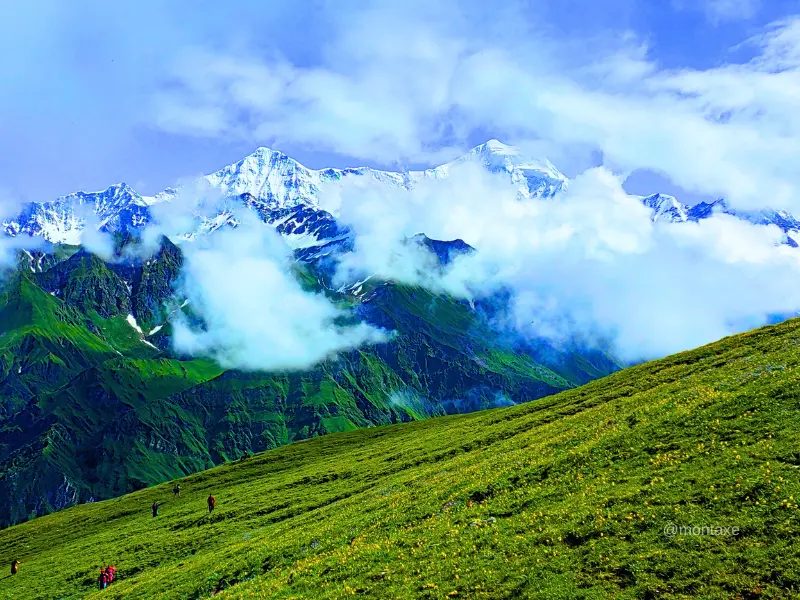
It is not louder or grander. It is calmer, wider, and more intimate.
Trekkers comparing winter routes often evaluate options such as Gulabi Kantha vs Kedarkantha based on crowd levels, scenery, and overall experience.
A Rare Cross-Valley Himalayan Trek
One of the least known but most remarkable aspects of Gulabi Kantha is its cross-valley route.
After winter, the trail can be extended from the Yamuna Valley, climbing to the Gulabi Kantha summit, crossing towards Darwa Pass, descending to Dodital, and finally reaching Uttarkashi in the Ganga Valley.
Such Yamuna-to-Ganga cross-valley treks are rare in Uttarakhand and add immense geographic and experiential value to Gulabi Kantha.
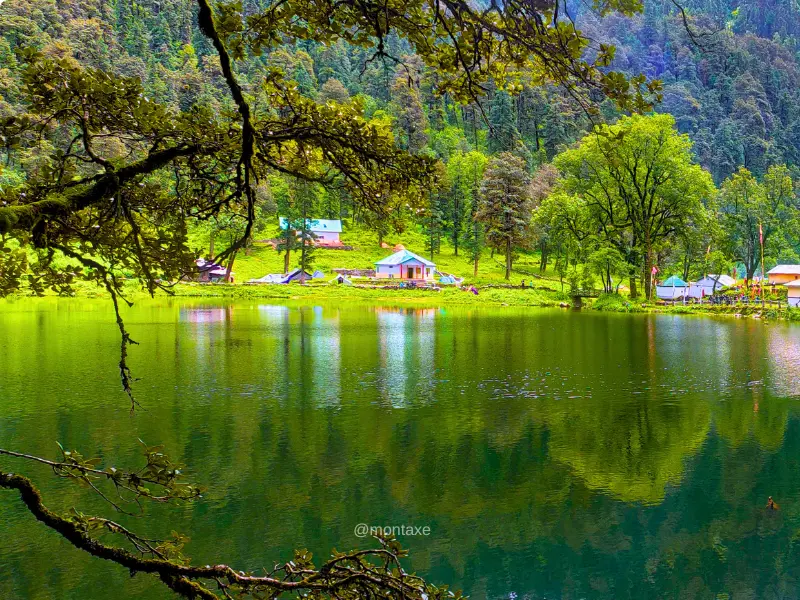
Growing Tourism, Supporting Locals
Since being named Trek of the Year, tourism activity around Gulabi Kantha has increased. For us, growth must always go hand in hand with responsibility.
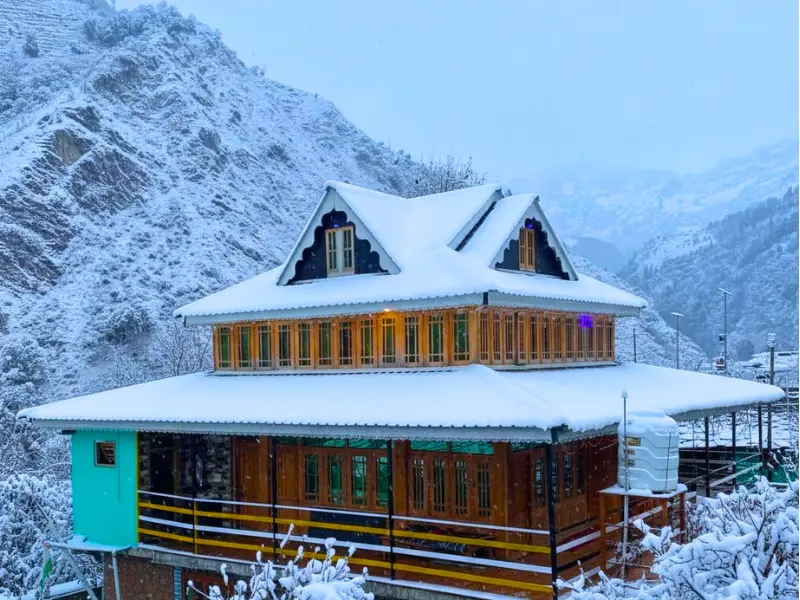
On the Gulabi Kantha trail, more than eighty per cent of our ground staff comes from local villages such as Nishni, Badiya, and nearby settlements. Supporting local livelihoods is not an add-on for us. It is part of how we operate.
Our Commitment To Sustainable Trekking
As interest in Gulabi Kantha grows, so does our responsibility.
Through our Cleanaxe initiative, we remain committed to:
- Keeping the trail clean, regardless of future crowd levels
- Promoting eco-friendly trekking practices
- Maintaining balance between human activity and fragile ecosystems
We are also in regular dialogue with the forest department, discussing long-term opportunities to preserve this trail responsibly.
A Trail That Deserved To Be Seen
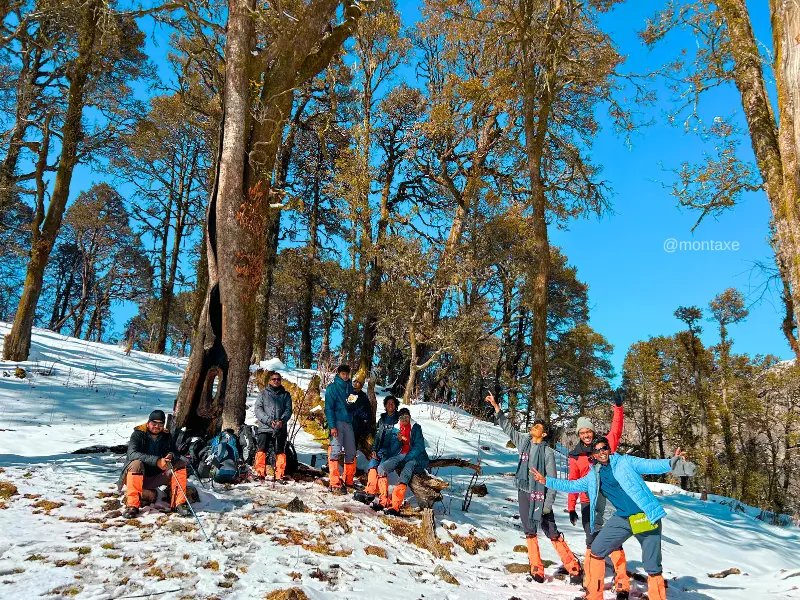
Gulabi Kantha did not suddenly become special in 2025.
It has always been special, quiet, beautiful, and honest in character.
The Trek of the Year 2025-26 recognition simply brought attention to what the mountains had already shaped over time.
And for those who walk it with respect, Gulabi Kantha still offers what it always has: space, silence, and a deep Himalayan connection.
Plan your trek to Gulabi Kantha with Montaxe.