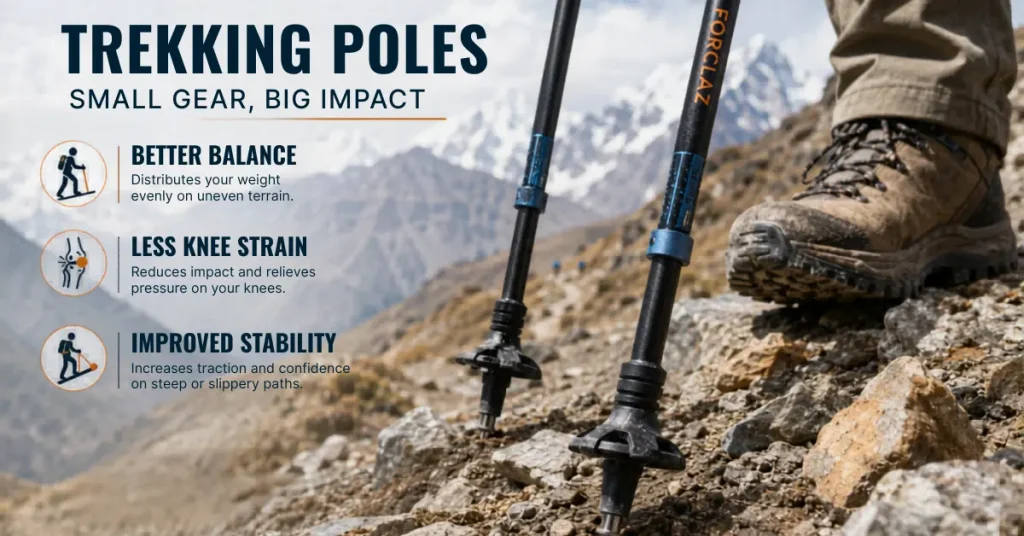
Trekking in the mountains is not just about strength – it is about balance, control, and efficiency.
Every year, many trekkers struggle on steep descents, slip on loose trails, or feel unnecessary strain on their knees. In most cases, the reason is not lack of fitness, but lack of proper technique and equipment.
One of the most effective yet underestimated tools in trekking is the trekking pole.
Often misunderstood as a support tool for older people, trekking poles are actually used by experienced trekkers and mountaineers worldwide. They are designed to improve stability, reduce physical strain, and help you move safely across challenging terrain.
Understanding how and when to use trekking poles can significantly improve your overall trekking experience.
What is a Trekking Pole?
A trekking pole is a lightweight, adjustable tool used to support movement while walking on uneven terrain.
It provides additional contact points with the ground, helping maintain balance and reducing the load on your lower body.
Modern trekking poles are designed for durability, grip, and adaptability across different terrains, including rocks, snow, and mud.
Why Trekking Poles Are Important
Improves Stability on Uneven Terrain
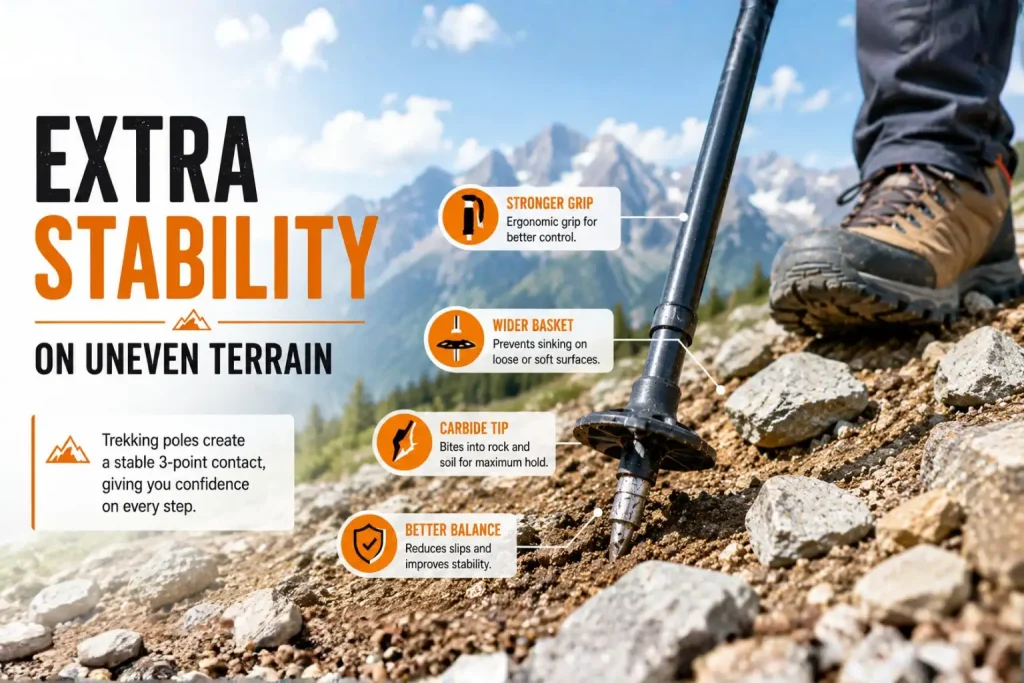
Mountain trails are unpredictable.
You often walk on loose rocks, uneven paths, muddy sections, or snow-covered trails. A trekking pole increases your points of contact with the ground, improving balance and reducing the chances of slipping.
This becomes especially important on narrow ridges and steep descents.
Reduces Pressure on Knees and Joints
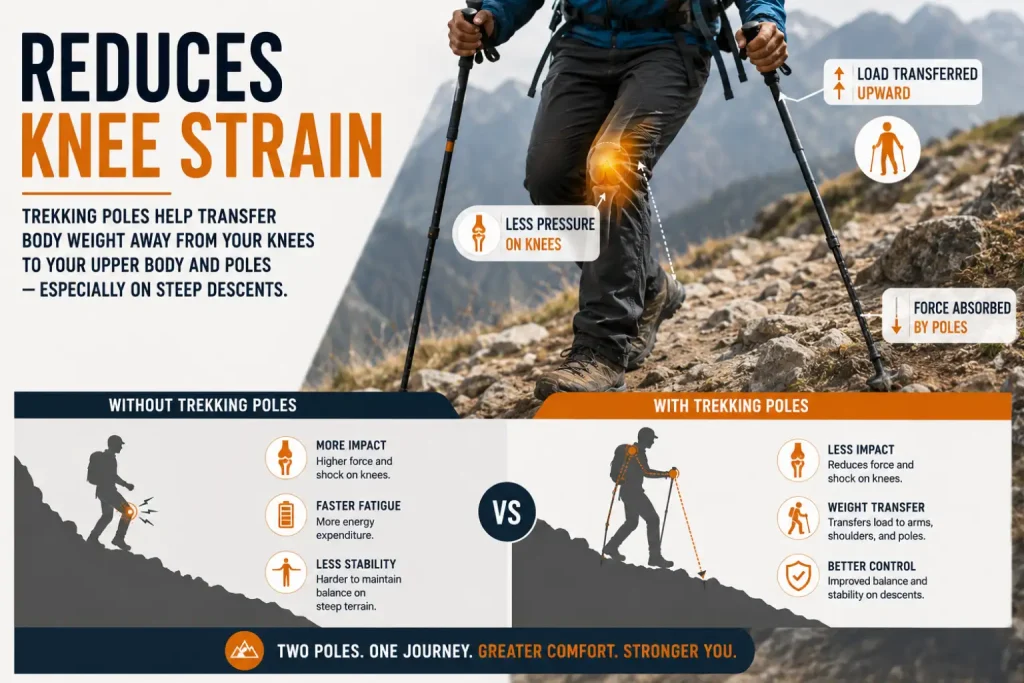
Descending is often more demanding than climbing.
During downhill movement, a large portion of your body weight is transferred to your knees. Over time, this leads to fatigue and can increase the risk of injury.
Trekking poles help distribute this load across your arms and shoulders, significantly reducing stress on your knees.
Improves Efficiency During Climbs
Climbing uphill requires consistent effort and controlled breathing.
Using trekking poles allows you to engage your upper body, helping you push forward and maintain a steady pace. This reduces fatigue and improves overall efficiency during long ascents.
Essential in Snow and Slippery Conditions
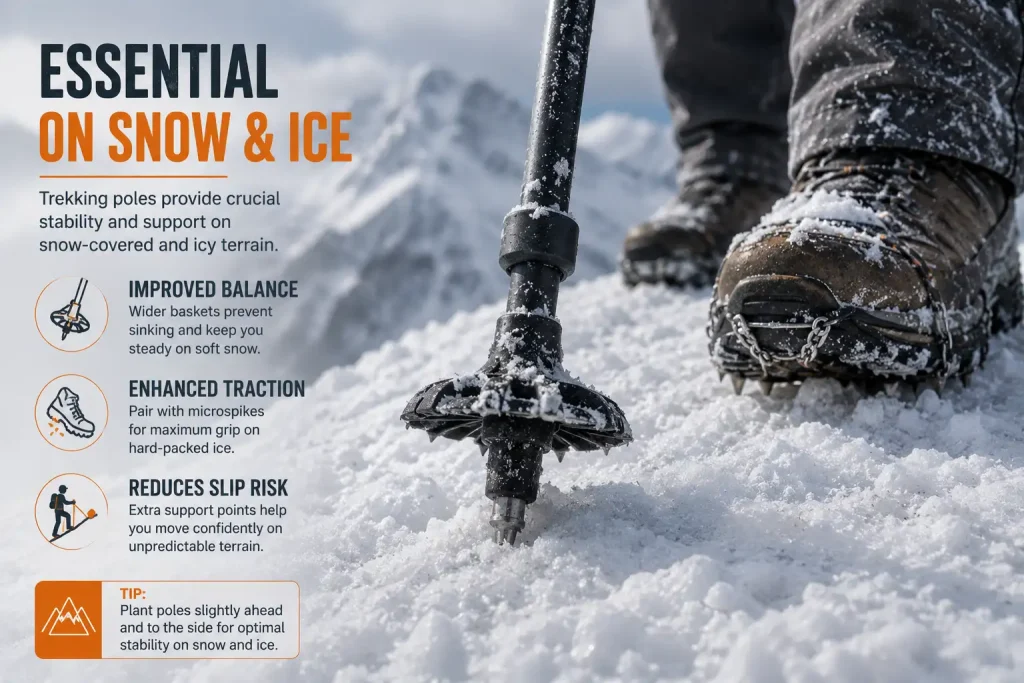
On snow or icy trails, maintaining balance becomes more difficult.
Trekking poles help you test the ground, maintain stability, and prevent slips. They are especially useful in winter conditions when combined with traction gear like microspikes.
Enhances Walking Rhythm and Endurance
Trekking is about maintaining a steady pace over long distances.
Using trekking poles helps create a coordinated rhythm between your arms and legs. This improves walking efficiency and allows you to conserve energy over time.
Single vs Double Trekking Poles
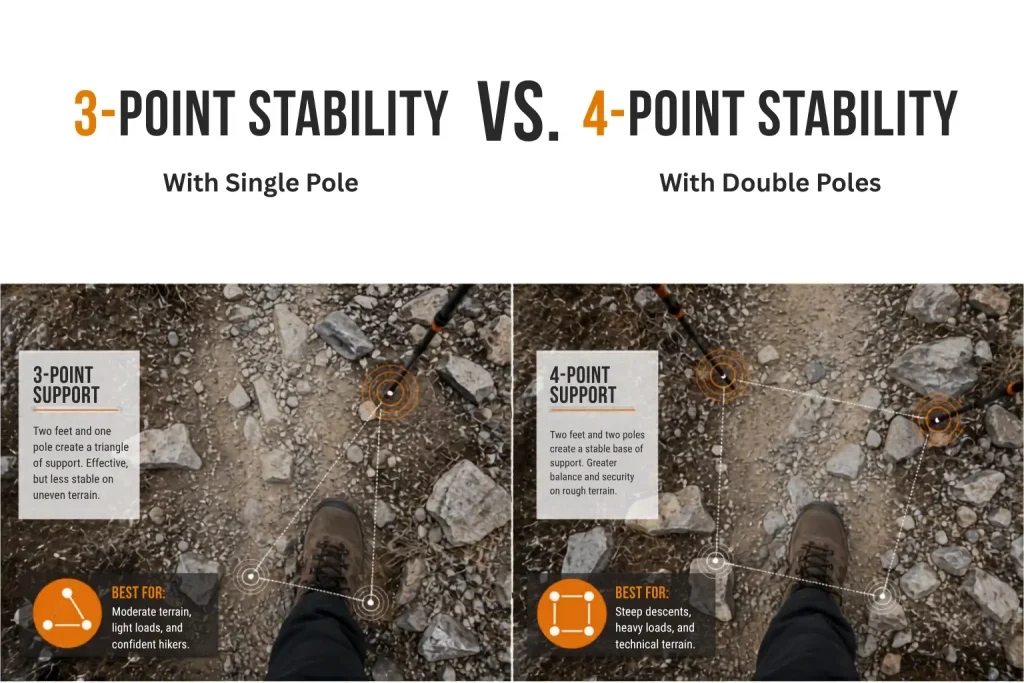
Choosing between one or two trekking poles depends on the terrain and duration of the trek.
Single Trekking Pole
A single pole offers basic support and is suitable for:
- Short treks
- Easy trails
- Beginners
It helps with balance but does not provide full weight distribution.
Double Trekking Poles
Using two poles provides better stability and is recommended for:
- Long-distance treks
- Steep ascents and descents
- Snow or icy conditions
- Carrying heavy backpacks
Double poles allow balanced support on both sides of the body and significantly reduce strain on the legs.
Practical Recommendation
- Easy terrain → Single pole can be sufficient
- Moderate to difficult terrain → Two poles are recommended
How to Use Trekking Poles Properly
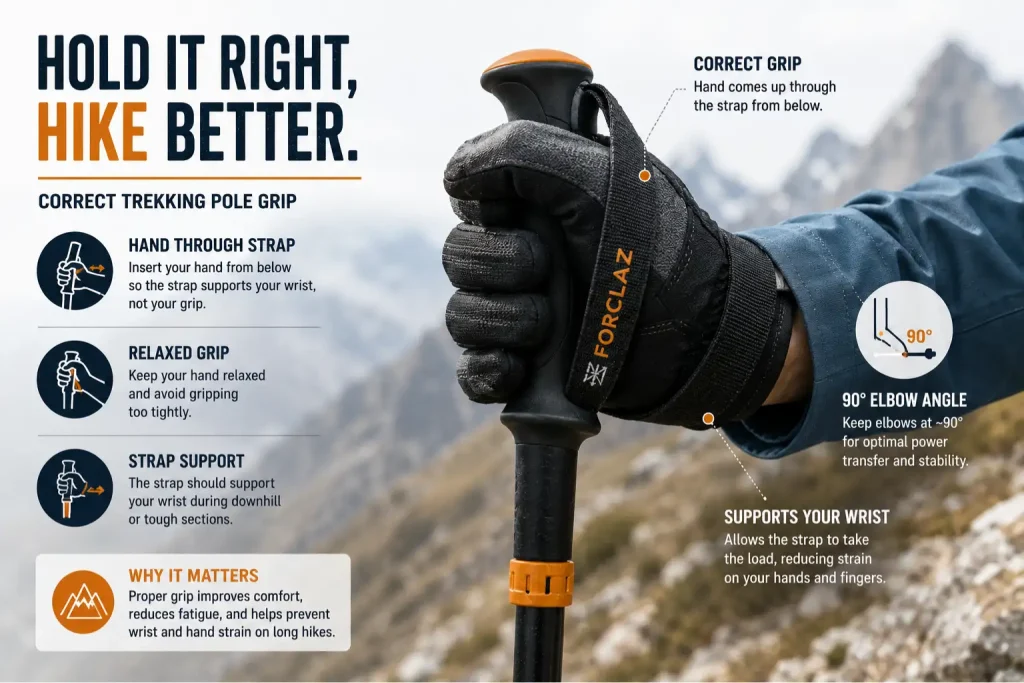
Using trekking poles correctly is important to maximize their benefits.
Adjust the Height
- Keep your elbow at approximately a 90-degree angle
- Shorten the pole slightly during uphill climbs
- Lengthen it slightly during descents
Use Wrist Straps Correctly
- Insert your hand through the strap from below
- Let the strap support your wrist instead of gripping tightly
This reduces hand fatigue and improves control.
Maintain Proper Movement Pattern
- Move opposite arm and leg together
- Right pole with left foot, and left pole with right foot
This creates a natural and efficient walking rhythm.
When Should You Use Trekking Poles?
Trekking poles are especially useful in the following situations:
- Steep ascents and descents
- Snow and ice-covered trails
- Loose gravel or rocky terrain
- River crossings
- Long trekking days with heavy loads
They are particularly important during summit climbs and downhill sections, where control and balance are critical.
Common Mistakes to Avoid
- Incorrect pole height
- Not using wrist straps properly
- Holding the pole too tightly
- Using only one pole on difficult terrain
- Avoiding poles during descents
Avoiding these mistakes improves both safety and efficiency.
Trekking poles are not just an optional accessory – they are a practical tool that improves safety, reduces strain, and enhances overall trekking performance.
Using them correctly allows you to move more efficiently, protect your joints, and stay balanced across different terrains.
Whether you are trekking for the first time or have years of experience, trekking poles can make a noticeable difference in how comfortably and safely you complete your journey.